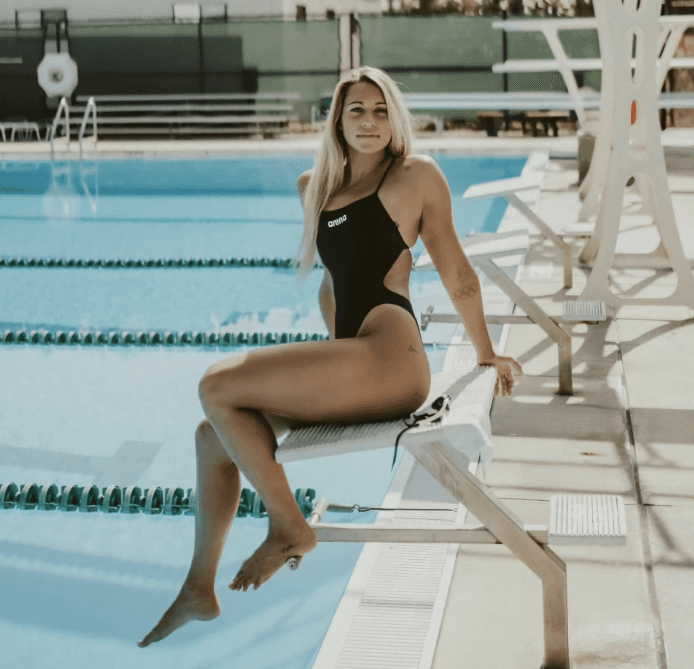
When, what inspired you, or who influenced you to start playing sports?
My parents wanted me to learn how to swim. I tried several different sports, but swimming was where I felt most at home—both because of the team and friendships I built, and because of the success I experienced.
How supportive were your parents (family) of your plan to study and compete in sports abroad?
They supported me in everything. After elementary school, I continued my education in Székesfehérvár, where I also attended high school. They never forced me to pursue sports—they let me find my own path. At the same time, they were always there for me, encouraging me and giving me 100% support in chasing my dreams.
How did Study N Sport help you?
It was an enormous help because neither my parents nor I spoke English. When I moved to the U.S. in 2017, I honestly had no idea what life in America would be like. I simply decided to take the opportunity, knowing that if it didn’t work out, I could always come home. I didn’t want to miss such a unique experience. Study N Sport handled everything, making the entire process smooth and stress-free.
How did training in the U.S. compare to training in Hungary?
The biggest difference was the focus on quality over quantity. In Székesfehérvár, the emphasis was on training volume, while in America I learned that what truly matters is how effectively you train during the time you have. We did a lot of strength and conditioning work, which was especially important for me as a breaststroke swimmer.
Most importantly, mental health always came first. I owe a great deal to my coach, Dave Rollins, who played a huge role in helping me reach the Olympic Games. I was treated as a person, not as a machine.
How easy or difficult was it to adjust? How did you manage with the language?
I barely spoke English when I arrived, so that part was definitely challenging. However, I’m an outgoing person and I make friends easily, so I quickly found my place.
How was your diet in the U.S. different from what you were used to in Hungary?
It’s difficult to eat healthily in the U.S., so I usually preferred cooking for myself at home. Because of that, my eating habits didn’t change all that much.
What do your everyday life look like now?
I currently live in Finland, where I train and work online with athletes. It’s definitely colder than Florida, but my partner and I have settled in very well. He signed with a professional basketball team in Salo, so we now live there together.
What has been your greatest achievement or favorite memory since you started swimming? What are you most proud of?
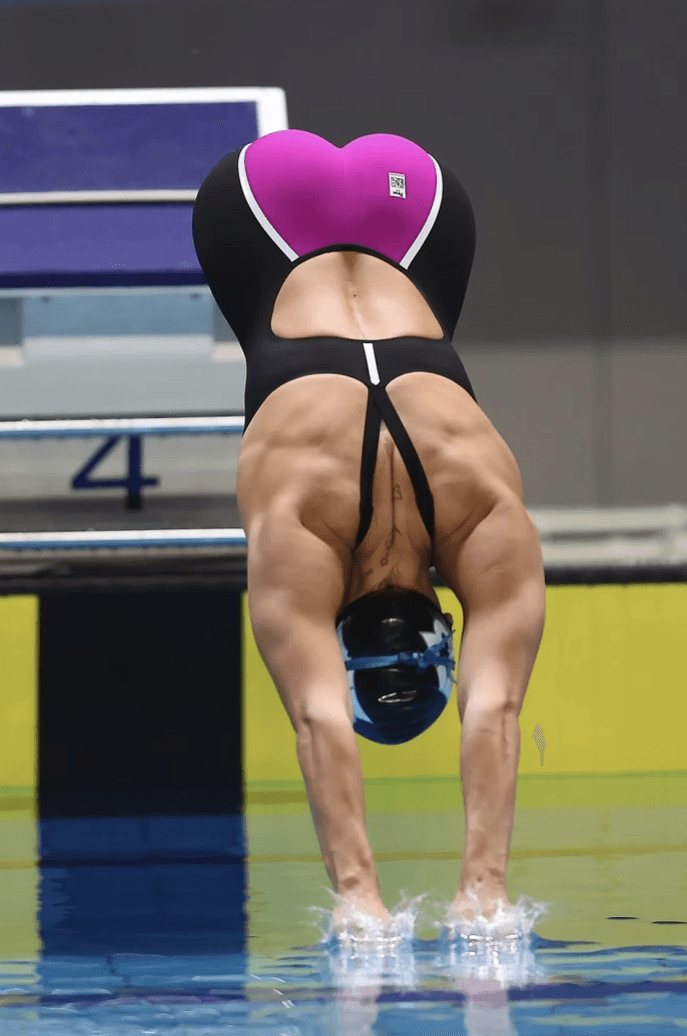
Without a doubt, competing at the Olympic Games is the achievement I’m most proud of. Along the way, I also accomplished many other milestones, including finishing 10th at the NCAA Championships in 2020 and 11th in 2021. I am a multiple-time Hungarian National Champion, have won several CCSA Conference Championships, and have been named Athlete of the Year at my university on multiple occasions. I would also highlight my appearances at both the European Championships and the World Championships, which are among the most memorable moments of my career.
What do you like most about America? Is there really such a thing as the “American lifestyle”?
The mindset is completely different. People live in a much more relaxed and easygoing way.
What do you think about the American education system? What do they do better—or simply differently—than in Hungary?
The focus is not on memorizing facts. Instead, there is much greater emphasis on group projects, teamwork, and practical learning.
What are your future goals, both in sports and outside of sports (in the U.S. and beyond)?
For now, I continue my career as a professional swimmer, competing for Debreceni Sportcentrum. I still want to get the very best out of my swimming career.
Tell us a little about your mental coaching program. How did your career as a mental performance coach begin, and why did you decide to work with athletes?
I earned my degree in Psychology in the United States. Psychology and the way people think have always fascinated me.
Having spent more than 20 years as an athlete, I’ve experienced many personal challenges, including depression, panic attacks, eating disorders, sleep problems, and the difficult journey of finding myself. After the Olympic Games, I especially felt a sense of emptiness and struggled to figure out what came next.
From personal experience, I know that many athletes are afraid to talk about these issues—but they should. If left unaddressed, they can become very serious. For elite athletes especially, every day, every hour, and every minute revolves around their sport. Eventually, they begin to identify only as athletes and struggle to find their identity beyond competition.
What is the goal of mental training?
Many people don’t realize that physical preparation alone isn’t enough. Mental strength also has to be trained every single day.
You can be physically prepared, but if you’re not mentally present in the moment or you’re unable to handle stress and pressure, your performance will suffer.
Being an athlete isn’t easy. You have to perform in training, competitions, school, and even in your personal life. I love working with athletes because, based on my own experiences, I can truly understand what they’re going through. Combined with my background in psychology, I can teach practical techniques they can use in everyday life, during training, and in competition.
The goal of mental training is to help athletes overcome mental barriers. Many struggle with self-confidence, anxiety, or negative thoughts. Mental training helps develop a positive mindset while also building resilience and mental toughness.
The ultimate goal is for athletes to become the best version of themselves—not only physically, but mentally as well. After all, victories and defeats are not decided only by the stopwatch or the scoreboard, but also by what happens in your mind. Mental training helps athletes achieve lasting success, even when facing challenges.
What is the most important mental skill an athlete should develop in order to succeed?
In my opinion, the most important mental skill is self-confidence. Confidence has a tremendous impact on performance. It is the belief an athlete has in their own abilities, in the work they have put into their preparation, and in their capacity to achieve their goals.
Do you have a memorable success story of an athlete you have helped through mental training?
Both the athletes I work with and their parents have shared very positive feedback about our work together. They’ve experienced improvements not only in their athletic performance, but also in their everyday lives and academic achievements.
We want to get to know you better


