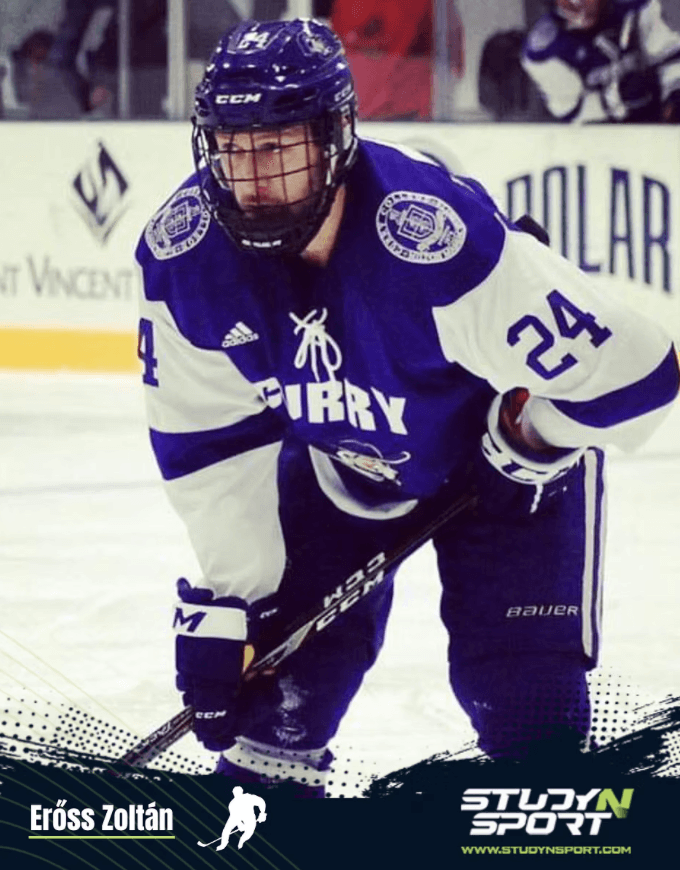
When did you start playing hockey, and what inspired you to pursue the sport?
I was born in Miercurea Ciuc (Csíkszereda), where ice hockey is one of the most popular sports. My parents and my older sister introduced me to the rink—at first just to watch games, and then, at the age of five, I started skating. It wasn’t long before I had a hockey stick in my hands, and I immediately fell in love with the sport.
My passion for hockey grew even stronger thanks to my brother-in-law, István Nagy, who had been one of the key players for Sport Club Csíkszereda since a young age. As a kid, I spent a lot of time with him. After games, he would take me into the locker room and often invited me to team events. That’s when it became my biggest dream to one day be part of that team myself.
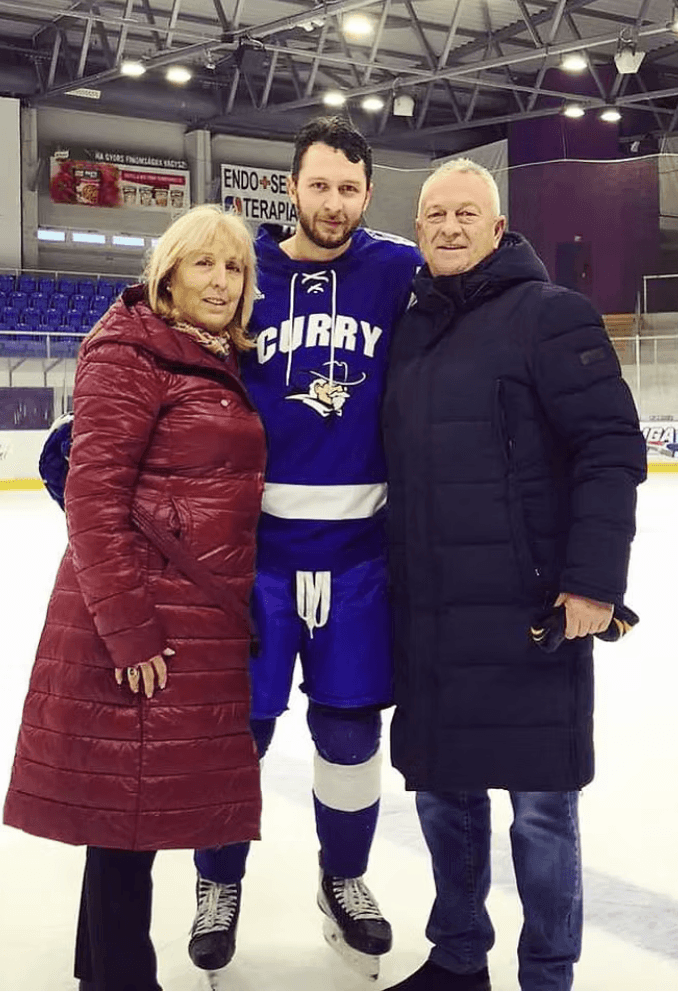
How supportive was your family of your decision to study and play hockey abroad?
My family fully supported my decision from the very beginning.
The first major challenge came in 2011, when, at the age of 16, I moved to the Avon Old Farms School in Connecticut. One of my best friends, Attila Kovács—who is now the Sports Director of the Hungarian Ice Hockey Federation—made the move with me. We faced the initial challenges together and kept encouraging each other that everything would work out.
The first few months were difficult, but I quickly improved my English, adapted to my new environment, and everything gradually fell into place.
One particularly special part of that experience was that my randomly assigned roommate turned out to be Anthony Capuano, whose father, Jack Capuano, was the head coach of the New York Islanders in the NHL at the time. Since then, Jack has also coached Team USA at multiple World Championships.
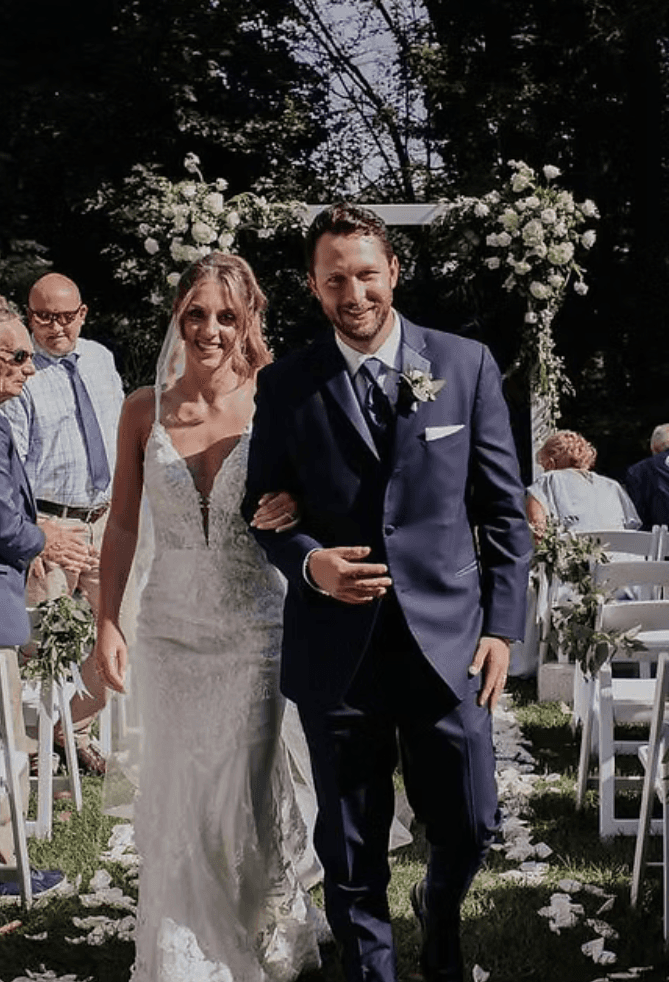
Anthony and his entire family welcomed me as one of their own from the very first day. I spent school breaks with them and had the unique opportunity to experience what life was like inside an NHL family. It was an unforgettable experience, and we’re still in touch every day. Anthony was even one of my groomsmen at my wedding.
Once my parents saw how well I had adapted—not only in hockey but also academically—they never questioned supporting future opportunities abroad, whether in the United States or elsewhere in Europe.
How did Study N Sport help you?
The following year, I played for Kiekko Vantaa U18 in Finland. During that season, I was also a member of the Hungarian U18 National Team. Unfortunately, just two weeks after the World Championship, I suffered a serious injury during a tryout in Finland. I underwent multiple surgeries and countless hours of rehabilitation, which kept me away from competition for an entire year.
During that period, I returned to Budapest, where my development club after Csíkszereda, MAC Budapest, helped me get back onto the ice. Although doctors gave me very little chance of returning to competitive sports, I managed to learn how to skate again despite losing three muscles around my shin.
That difficult period also pushed me to focus more seriously on my education, and that’s when I first became familiar with Study N Sport.
After another year in Pennsylvania to continue rebuilding both academically and athletically, I returned to MAC Budapest for my final junior season.
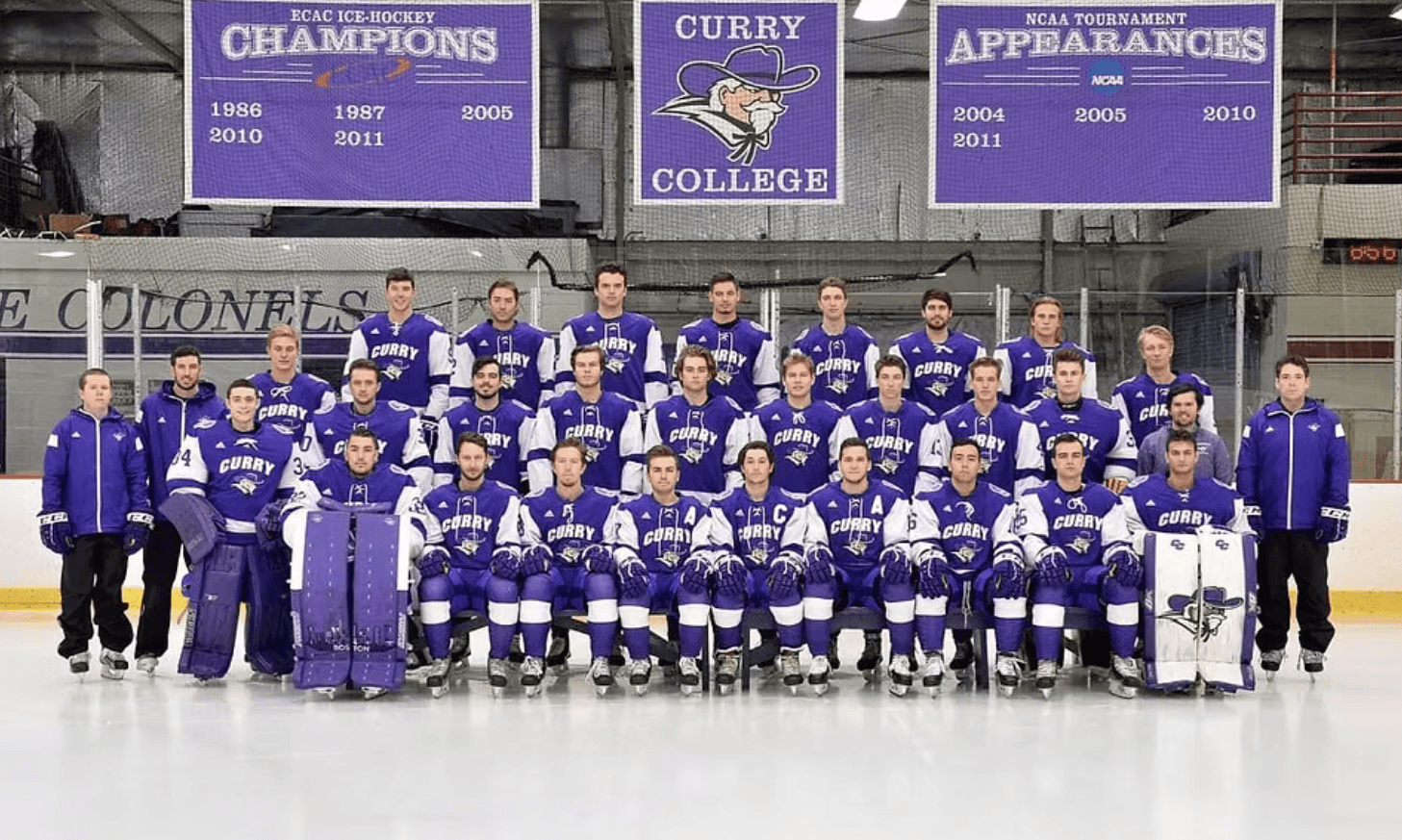
Throughout that entire process, Study N Sport supported me with preparing for American college opportunities and communicating with coaches. Thanks to their help, I first committed to the University of Southern Maine, before eventually transferring to Curry College in Boston.
How easy was it to adapt? How did you manage with the language?
Adjusting wasn’t difficult because by then I already spoke English fluently. Before college, I had already spent time in Connecticut, Pennsylvania, and Finland, where English was also my primary language.
The college environment quickly felt like home because, as a student-athlete, you’re constantly surrounded by teammates. I never had to build a new community from scratch—that’s one of the greatest advantages of being a college athlete in the United States.
Which university did you attend, and what did you study?
I attended Curry College, a small private college in Boston.
Our hockey program competes in NCAA Division III, where it is currently ranked 6th nationally. In college hockey, Division III is considered the second-highest competitive level because NCAA Division II hockey is much smaller.
Compared to other sports, college hockey is unique. The combined Division I and Division III programs—about 140 teams altogether—represent the highest level of NCAA hockey competition. In sports like football, Division I alone includes well over 140 teams.
I earned my bachelor’s degree in Business, and in 2020 I received the Leadership in Business Award, the highest honor presented by the department.
In May 2021, I also completed my Master of Business Administration (MBA).
Can you tell us about your career since graduating?
I currently work for Clean Harbors, the largest environmental services company in the United States and Canada, employing more than 20,000 people.
Based at the company’s headquarters in Boston, I manage a team of 25 inside sales professionals. Ten team members cover regional markets across the U.S. and Canada, while fifteen colleagues based in India support our North American sales operations.
I joined Clean Harbors in mid-2024. Before that, I spent three years working at FullFunnel in downtown Boston in various sales and marketing consulting roles.
What advice would you give to young athletes considering this path?
My advice to anyone who has the opportunity to compete in collegiate sports in the United States is simple: be brave and go for it!
It truly is a once-in-a-lifetime experience that can open countless doors for your future. There will certainly be difficult moments and important decisions along the way, but by the time you graduate—with one or even multiple degrees—you’ll look back with confidence and be incredibly proud of what you’ve achieved.
In my case, graduating from college also marked the end of my competitive hockey career, and I embraced that with gratitude. I felt that hockey had taken me exactly where I needed to be and that I was ready for the next chapter of my professional life.
At the same time, I’ll never forget everything this sport has given me. I sincerely hope I’ll have the opportunity to give back to both the Hungarian and the Székely hockey communities throughout my life.
I also owe special thanks to my mentor coaches—Glen Williamson, Tibor Márton, Sándor Puskás, and Lehel Szántó—without whom I never would have reached the NCAA level. Every athlete has mentors like these who shape their development, both on and off the ice, and they deserve endless gratitude.
Finally, my most important advice is this:
Take advantage of every opportunity. Study hard, dream big, and get involved in as many activities as possible—both on and off campus. The experiences you gain and the relationships you build will stay with you for the rest of your life.
We want to get to know you better


