
How did you first get into sports? What inspired you to start?
I was seven years old when I started playing tennis. My grandmother was the one who found a tennis course in Csongrád through a newspaper advertisement. No one in my family had ever played tennis before, so it was really a coincidence that I got started.
How supportive were your parents and family of your decision to study and play sports abroad?
From the very first moment I shared my plans with them, they stood behind me. Without their support, I honestly don’t think I could have made this journey happen.
They were there for me through every high and low, and I know how difficult it must have been for them to let their 18-year-old son move alone to a completely unfamiliar country. I’ll always be grateful for their unconditional support.
How did Study N Sport help you throughout the process?
We stayed in close contact from the very beginning. They helped me with everything—from writing emails to college coaches and editing my highlight video to translating my academic transcripts. They even arranged extra tutoring sessions for me, which took a huge amount of pressure off my shoulders.
Even after I arrived in the U.S., they kept in touch, regularly asking how I was doing, whether I had settled in well, and if I needed anything. That meant a lot to me.
How did training in the U.S. compare to training in Hungary?
I was fortunate to have an excellent coach in Hungary, László Bakos, in Szentes. The biggest difference, however, was the overall training volume and workload.
In the U.S., we trained much more frequently and the intensity was significantly higher. Besides individual and team tennis practices, we also had separate strength and conditioning sessions as well as dedicated footwork training.
How easy or difficult was it to adapt? How did you manage with the language?
Fortunately, adapting to life in the U.S. was much easier than I expected. I joined a fantastic team with athletes from many different countries, and everyone understood how challenging the beginning can be, so they were incredibly supportive both on the court and in everyday student life.
During the first couple of weeks, I was definitely nervous whenever I had to speak English because it didn’t come naturally yet. But after those first weeks, I got used to it, and communicating became much easier.
How was your diet in the U.S. different from what you were used to in Hungary?
Honestly, it wasn’t very different because I had always eaten quite healthily back home as well.
The biggest difference was that in the U.S. I ate very little junk food or sweets because our coaches paid close attention to our nutrition and expected us to maintain healthy eating habits.
What did your everyday life look like?
The tennis season was extremely demanding because we traveled so much.
We usually left on Thursdays and sometimes didn’t return until Sunday after tournaments. On a typical intensive training day, I started with footwork practice at 6:00 a.m., followed by breakfast and then classes.
During the day I also had an individual practice session, followed by team practice in the afternoon and strength training in the evening. Of course, the schedule varied depending on our competition calendar and match days.
What has been your greatest memory or achievement in tennis? What are you most proud of?
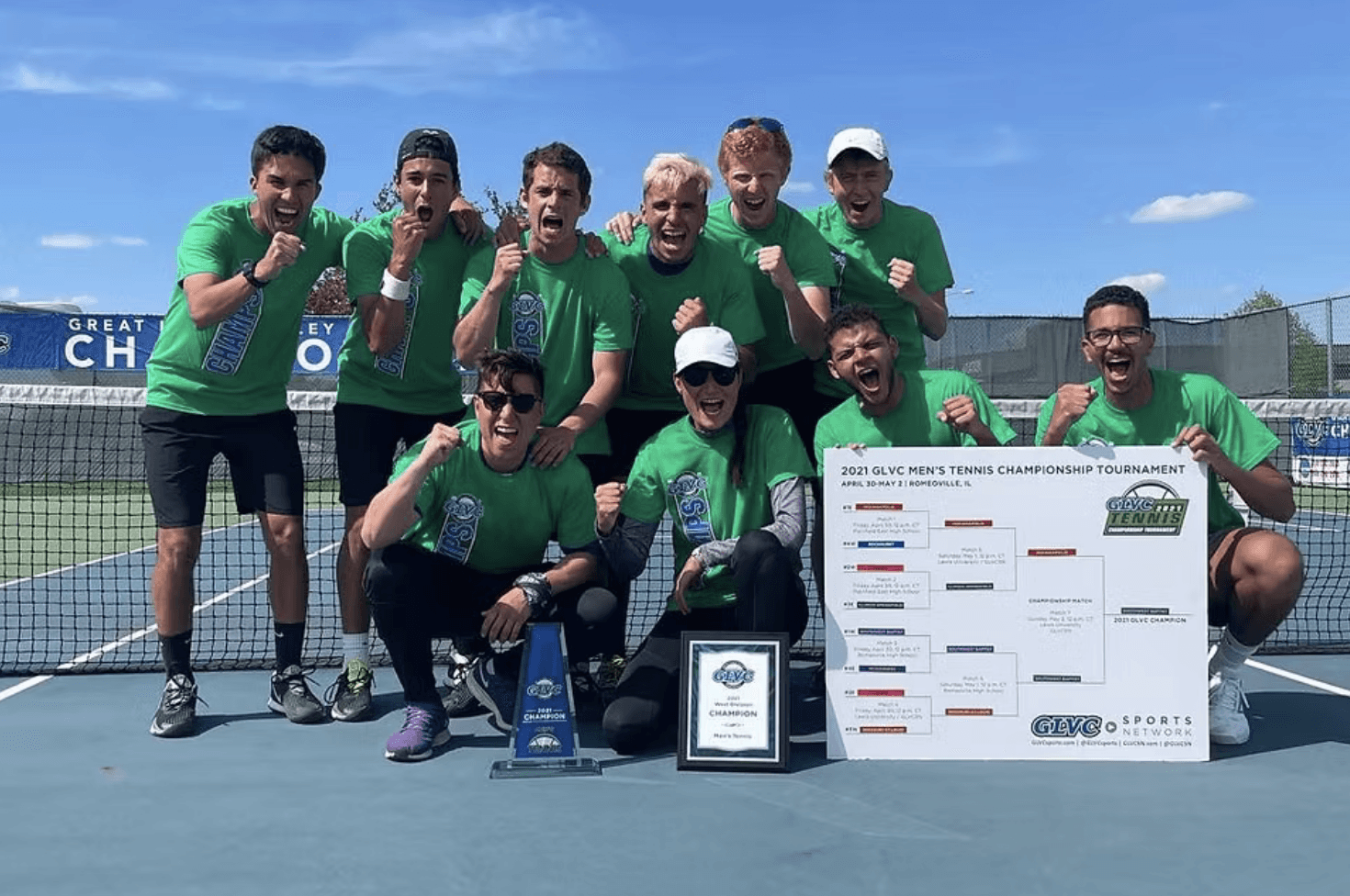
We won both our conference regular-season title and conference championship three times, and those are memories I’ll always cherish.
However, the two achievements I’m most proud of are reaching the NCAA National Quarterfinals with my team and receiving the Arthur Ashe Leadership & Sportsmanship Award. This award is presented to only one player in the entire division each year.
What made that achievement even more special was that I received it while serving as team captain.
What do you like most about America? Do you think there is such a thing as the “American lifestyle,” and if so, how is it different from life back home?
I definitely think the American lifestyle exists because, from my perspective, almost everything felt different compared to life back home.
The biggest difference was how much easier it was to balance academics and athletics. The distances between cities are enormous—sometimes we even had to fly to away matches.
I’d also say that everyday life felt less stressful overall, although that’s simply my personal experience.
What do you think about the American education system? What does it do better—or simply differently—than the Hungarian system?
I found it to be more practical and easier to manage.
The coursework is spread much more evenly throughout the academic year, so everything doesn’t pile up during exam period. Finals Week lasts only one week, during which all final exams take place, and once it’s over, students can head home.
Overall, I felt that the American education system prepared me much better for real life after graduation.
What are your future plans and goals, both in sports and beyond?
I graduated in 2022 and then took advantage of my OPT, which allowed me to work in the United States for an additional year after graduation.
During that time, I worked as a tennis coach between New York and Kansas City. Afterward, I completed my master’s degree in England.
Today, I live in London, where I work with highly ranked junior tennis players.
We want to get to know you better


