
How supportive were your parents (and family) of your decision to study and play sports abroad?
Fortunately, my parents were incredibly supportive. I was in my junior year of high school when Study N Sport first approached me with this opportunity, and from the very beginning, my parents stood by me and supported me every step of the way.
They traveled with me from Pécs to Budapest so we could meet the team, discuss the details, and learn more about the program together. They were there for me while I was preparing for my language exams and the SAT, and they continued to support me throughout the entire process—not only before I left, but also while I was already studying in the United States.
I’m sure it wasn’t easy for them, but I always felt that they were by my side and that I could count on them whenever I needed help.
How did Study N Sport help you throughout your journey?
Study N Sport—or, as I first knew them, Easygo to USA—supported me throughout the entire process of getting to the United States.
They helped me prepare for my English language exam and the SAT by providing the necessary training and guidance. One of the biggest advantages was that they connected me with college coaches in the U.S., something I wouldn’t have been able to do on my own.
They were always there to support me throughout the communication process, answered all of my questions, and guided me every step of the way. On a personal level, they also meant a lot to me because I always felt that I could rely on them whenever I needed advice or encouragement.
How did training in the U.S. compare to training in Hungary?
Training in the U.S. introduced me to many new aspects of tennis that I hadn’t experienced before.
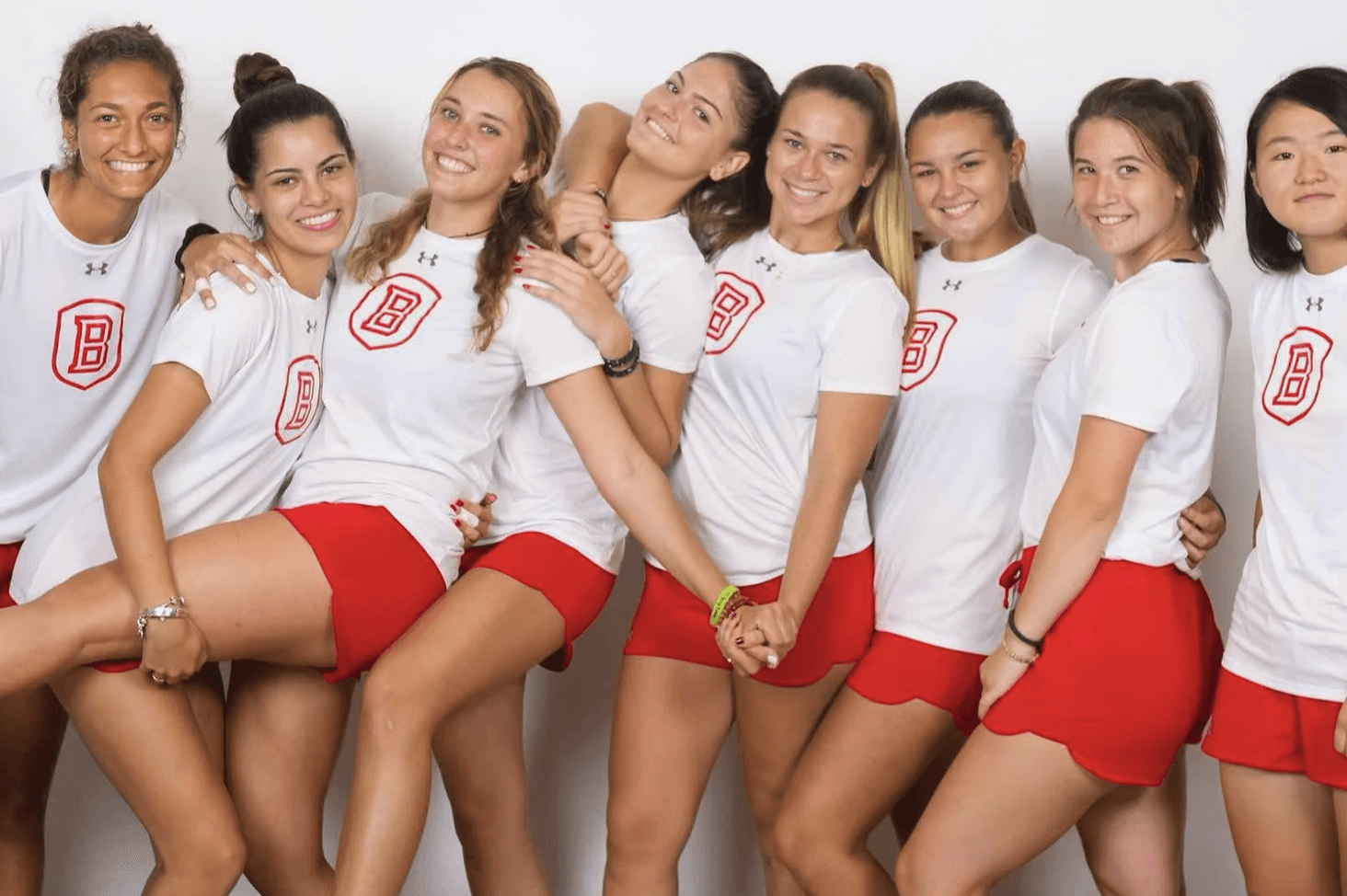
The biggest difference for me was strength training with heavy weights, something I had never really done in Hungary. Another major change was training as part of a team of around eight players, while individual sessions were much less frequent.
Every practice started with a structured team warm-up, and we always finished by shouting our team’s motto together, which symbolized our unity and team spirit.
How easy or difficult was it to adapt? How did you manage with the language?
Fortunately, adapting to life in the U.S. happened quite quickly. One of the reasons was that my university had a large international student community, so the campus was very multicultural and people were incredibly welcoming. Our tennis team was also very international, so many of my teammates were in a similar situation to mine.
Language wasn’t a major challenge because I had been studying English since elementary school. I always enjoyed learning languages, and by the time I moved to the U.S., I had already earned two advanced-level English language certificates.
Of course, it still took some time for my mind to completely switch to thinking in English and to get used to not hearing Hungarian around me. There were some funny moments when people didn’t understand what I meant because I used British expressions instead of American ones, but I quickly learned how to communicate more naturally.
In fact, I adapted so well that even today, back in Hungary, I still haven’t lost my American accent. People are often surprised when they hear me speak English! 😊
How was your diet in the U.S. different from what you were used to in Hungary?
The eating habits and food culture in the U.S. were very different from what I was used to back home. One of the biggest surprises for me was seeing how enormous the portion sizes were, even though I had expected them to be larger.
In general, I noticed that most foods contained much more sugar and calories, so you really have to pay attention to what you eat. In my case, even though I ate roughly the same amount of food as I did in Hungary, I still started gaining weight despite training six days a week, often twice a day.
Our university had several dining halls and restaurants with plenty of options to choose from. I usually tried to eat freshly prepared cooked meals whenever possible. Still, I found myself missing Hungarian cuisine. I grew up eating delicious, home-style meals, so I was always looking for similar flavors in the U.S., but I rarely found them. That often left me feeling a little homesick.
What did your everyday life look like?
My daily routine largely depended on whether we were in the fall or spring season.
Our tennis team competed in both semesters, but the competition formats were different. The fall season was shorter and focused on individual tournaments, while the spring season lasted throughout the semester, with team matches against other universities almost every weekend.
In the fall, practices usually started when the academic year began. We trained every day except Mondays, since NCAA regulations required us to have one mandatory day off each week. My schedule depended on both my class timetable and our training plan. Some days I had classes in the morning and practice in the afternoon, while on other days it was the other way around.
During the fall season, we usually competed in four or five tournaments, and on the weekends without competitions we focused on training. By late October or early November, the season came to an end, which meant our weekly training hours were reduced. Practices became shorter or less frequent until the semester ended.
After Christmas break, we usually returned to campus early for preseason training. Before classes even started, we spent about a week training two or three times a day to make sure we were fully prepared for the first competition of the spring semester.
During the spring season, we traveled almost every weekend for matches, often leaving as early as Friday. Because of that, weekdays were very busy. We had to stay ahead with our coursework, complete assignments early, notify professors about upcoming absences, and make arrangements to keep up with classes while traveling.
Even with all of that, my typical days followed a similar routine: practice, classes, studying—and Mondays were always our day off from training.
What has been your greatest memory or achievement in tennis? What are you most proud of?
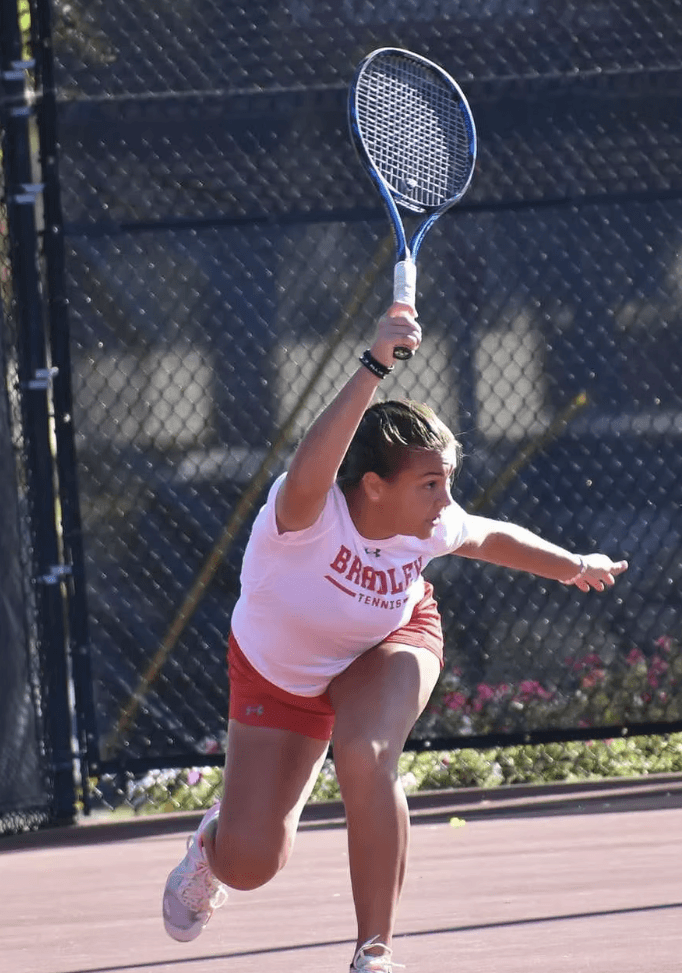
I’ve been playing tennis since I was five years old, and over the years I’ve been fortunate enough to experience many unforgettable moments.
Before going to college, I was ranked among the top 20 junior players in Hungary, and one of my proudest achievements was reaching the quarterfinals of the Hungarian National Championships. I also competed successfully in numerous regional championships and other tournaments.
One of my favorite memories from college was during one of my fall seasons, when I won my tournament flight and had an incredibly successful overall fall season. It remains one of the highlights of my collegiate tennis career.
What do you like most about America? Do you think there is such a thing as the “American lifestyle,” and if so, how is it different from life back home?
One of the best things America gave me was the opportunity to meet incredible people. I still keep in touch with many of them today, and I miss them very much. They—and the time I spent with them—are my favorite memories from my years in the U.S.
America brought me countless amazing experiences, but it also came with difficult moments. Thankfully, my family and the people I met there helped me through those challenges.
To me, the “American lifestyle” is really the collection of experiences I had while living there. Of course, I got to experience classic American traditions—red cup house parties, country bar nights, basketball games, and so much more—but those four years were about far more than that.
Unfortunately, I didn’t have as much time to experience life outside of the university because most of my time was dedicated to tennis and studying. Even during my free time, school and sports were often still on my mind.
After graduating, I had hoped to stay in the U.S. and work, but unfortunately I couldn’t find an employer willing to sponsor a work visa during or shortly after the COVID period. In my field, obtaining employment as an international graduate required employer sponsorship, and that proved to be extremely difficult.
Overall, I truly believe there is such a thing as the American lifestyle. For me, it comes from the sense of freedom you experience while living there. America is a true cultural melting pot, and because of that, it’s much easier not to feel like an outsider.
What do you think about the American education system? What does it do better—or simply differently—than the Hungarian system?
One major difference is that the United States has both private and public universities, and they each have their own unique culture.
From my experience, private universities tend to be more expensive, which often means they have fewer students—although that’s not always the case. Overall, higher education in the U.S. is costly, so unfortunately it’s not accessible to everyone.
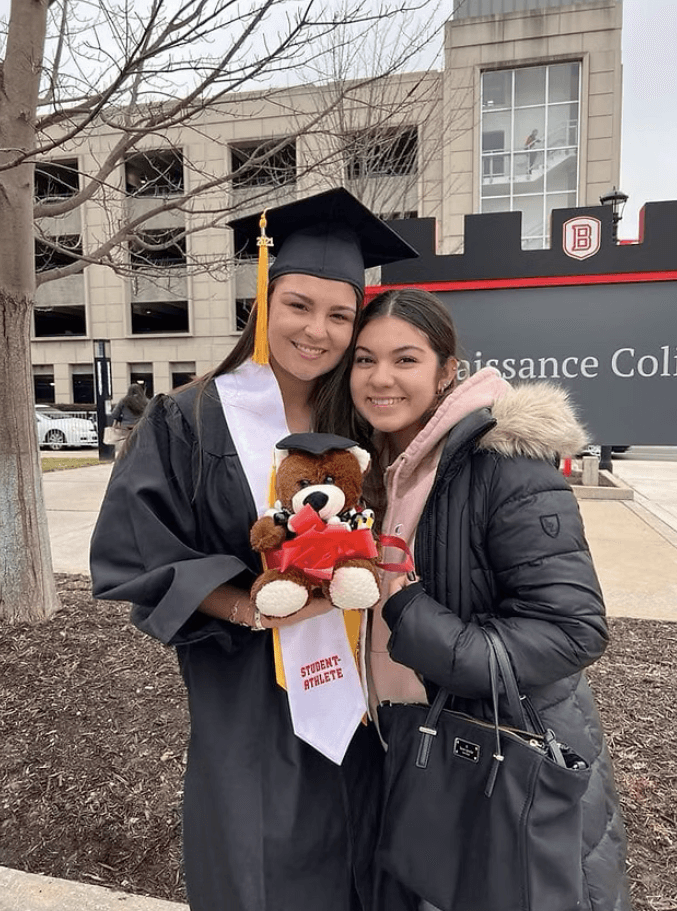
I attended Bradley University, a small to mid-sized private university, where education was taken very seriously and the academic standards were excellent.
Because college sports have such a long tradition in the U.S., I believe the American system offers something that is much harder to find in Hungary. You don’t have to choose between pursuing higher education or continuing your athletic career—you can successfully do both at the same time.
For me, American college athletics represented the perfect balance. I didn’t have to give up tennis, while at the same time I received a high-quality university education.
Being a student-athlete also teaches valuable life skills, such as time management, organization, and discipline. From what I’ve heard from my American friends and former classmates, employers in the U.S. highly value these qualities. I can’t personally confirm that from experience, but it’s something I’ve consistently heard from people who stayed there after graduation.
One area where I believe the American system is weaker is pre-university education. My former roommate told me that in high school, subjects like geography or physics weren’t always mandatory for an entire year. Students could often choose which classes they wanted to take, much like they do at university.
I don’t have firsthand experience with the American high school system, but I do think this can sometimes result in students having less general knowledge about the world. Of course, this isn’t true for everyone—it’s simply my personal impression based on the experiences I’ve had.
What are your future plans and goals, both in sports and beyond?
I graduated in December 2021 and then returned to Hungary.
I had hoped to stay in the United States for a while and begin my professional career there. I attended several career fairs and job interviews, but unfortunately I wasn’t able to find an employer willing to sponsor a work visa.
By the end of college, I had become mentally exhausted from competitive tennis. During my final years, many changes took place within the team, and unfortunately not all of them were handled in the best way. I struggled with multiple injuries, and eventually it all became overwhelming.
Some of the training programs were poorly designed, and the expectations placed on us were sometimes unrealistic. Several players suffered injuries during that period, and unfortunately those injuries were not always handled properly. There were times when we trained through pain instead of reporting it because we felt it was the easier option.
Because of this, I needed a break from competitive sports after returning home. That break lasted about a year and a half, and since then tennis has remained an enjoyable hobby rather than a competitive pursuit.
After graduation, I took a few months to rest before starting my first job as a logistics specialist in April 2022. I’ve continued building my career in logistics ever since, and today I work as a Logistics Manager.
Unfortunately, I was recently involved in an accident and will soon undergo leg surgery, so I won’t be able to play sports for a while. My goal after recovery is to rediscover my love for exercise and tennis in an environment where I play because I enjoy it—not because I have to.
If everything goes according to plan, my partner and I will travel back to the United States next year for my former roommate’s wedding.
Although I would love to visit the U.S. again, I don’t think I could see myself living there permanently. Even so, America will always have a special place in my heart because it has given me so much. I met incredible people, traveled extensively, made lifelong friends, learned, celebrated, and truly lived. Most importantly, I learned a great deal about myself.
None of this would have been possible without Study N Sport, and to this day I am incredibly grateful to them for giving me the opportunity to experience all of it.
We want to get to know you better


