
Tell us a little about how you got started in wrestling, and which university you attended in the United States.
When I was 10 years old, my classmates and I were on our way to a physical education class at school in Karcag, where I first discovered wrestling. A coach from the local wrestling club visited our class, brought wrestling mats, and introduced us to the sport. The moment I stepped onto the mat, I felt that wrestling was going to bring something special into my life.
I still remember going home after school that day and telling my mother, “There’s a wrestling practice next week, and I’m going.”
She smiled and said, “Oh, you’ll probably forget about it.” But when the following week arrived, I reminded her that it was wrestling practice day. She realized I was serious, so my brother and I went to our first training session—and I never looked back.
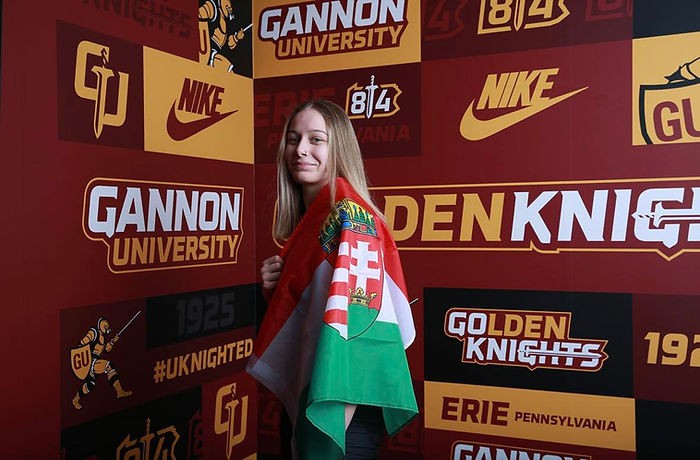
In the United States, I attended Gannon University, where I studied Accounting while competing as a wrestler.
I plan to stay in the area after graduation because I have accepted a position at the local district court. This will also allow me to continue my wrestling career while giving back to the community that has given me so much. Alongside competing, I will help coach the wrestling team and also take on some team management responsibilities.
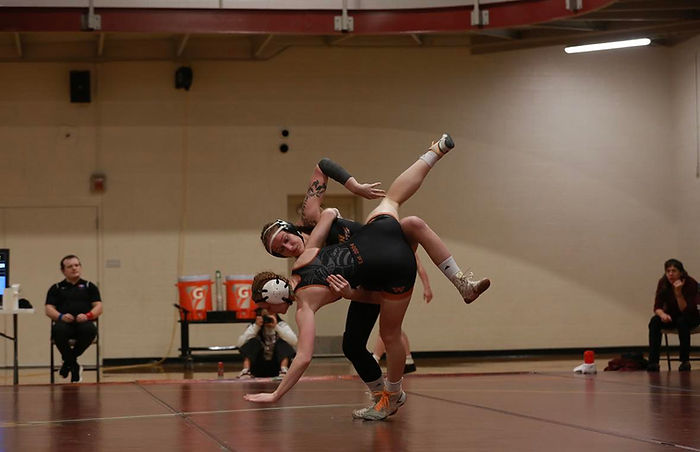
Looking back, why did you decide to study and wrestle in the United States?
In 2021, my parents and I made the decision to give my wrestling career a fresh start. At the time, I had reached a difficult point in my career, and we believed that this was the best path toward achieving my biggest dream—competing at the Olympic Games. My ultimate goal is to become an Olympic wrestler and win an Olympic gold medal.
We believed that the United States would provide the ideal environment because women’s wrestling there is at an exceptionally high level. I had previously competed against several American wrestlers who later went on to win Olympic silver and gold medals at the Paris 2024 Olympic Games. That gave me the confidence that the American wrestling system was producing world-class athletes and offered something unique compared to the European approach.
With that in mind, I decided to take on this new challenge so I could become the best wrestler I possibly can while also earning an excellent university education.
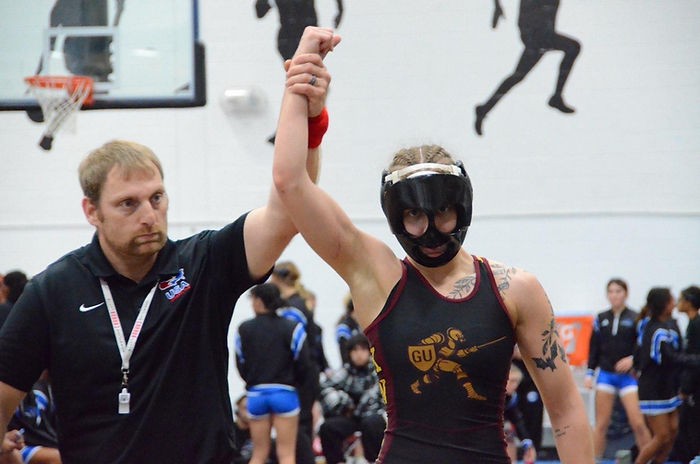
Now that you’ve graduated, how do you look back on your experience? How has this journey changed you both as a person and as an athlete?
Looking back, I can honestly say that the past four years in the United States have completely transformed me, both as a person and as an athlete. The experiences I’ve gained through balancing college and competitive wrestling are difficult to put into words.
One of the things I’m most grateful for is that throughout my athletic career in the United States, I never suffered a major injury. That is a testament to the incredible coaches and medical staff who supported me every step of the way. I was able to compete in every tournament and achieve results and milestones that I never imagined would be possible when I first arrived.
Academically, this experience has been just as rewarding. While training every single day, I earned my degree in Accounting, and thanks to that, I now have the opportunity to remain in the United States. I was fortunate enough to secure an amazing job, something I am incredibly grateful for.
Of course, none of these achievements happened because of me alone. Many people assume success is an individual accomplishment, but that’s simply not true. My family, friends, coaches, professors, and classmates all played an important role in helping me become the person I am today.
Overall, if I had the chance to do it all over again, I wouldn’t change a single thing. I would choose this journey again without hesitation. Simply having the opportunity to live this dream has been one of the greatest blessings of my life. Above all, I am grateful to my family for believing in me and supporting me every step of the way. Knowing that I can make them proud—whether by earning top academic results or standing on the top of the podium after a competition—means everything to me.
What do you see as the biggest differences between Hungarian and American wrestling in terms of culture, training, and the competition system?
This is probably one of the most difficult—and at the same time one of the most frequently asked—questions I receive. The simplest answer is: they’re completely different.
In the United States, people don’t see women’s wrestling as something unusual. Girls compete at a very high level from high school onward, just like boys, which gives them a tremendous head start in their athletic development. It’s incredibly difficult to compete with athletes who have grown up in that environment.
In Hungary, many young people are introduced to wrestling only if they have a family member or someone close to them who is involved in the sport. In the United States, children are exposed to wrestling through schools from an early age, long before high school, so it’s a familiar and widely accepted sport. It’s also very common for both male and female wrestlers to compete in other sports during school. Even if they eventually choose a different sport at the collegiate level, many can still proudly say they were wrestlers for years.
There is a much greater emphasis on wrestling in the United States. Coaches truly believe that every athlete has the potential to become the best, even if the athlete doesn’t believe it themselves. Their goal is to help you reach the highest possible level. Every coach hopes to develop future Olympians and athletes capable of competing on the world’s biggest stage. I believe this mindset plays a huge role in the success of American women’s wrestling.
Once you become part of a college wrestling team, your goals become very clear: to win a national championship and ultimately earn the opportunity to compete at the Olympic Games.
One of the biggest differences is simply the number of competitors. At a single wrestling tournament in the United States, it’s not unusual to see around 500 female wrestlers competing across ten weight classes. In Hungary, by comparison, we’re happy if around 30 athletes compete at a national senior championship.
Another major difference is the approach to improvement and failure. In American wrestling, there’s a strong emphasis on learning from your mistakes. If we compete on Sunday, we’re back in the wrestling room on Monday analyzing exactly what went wrong and how we can improve. The mindset isn’t, “I lost, and that’s a failure.” Instead, it’s, “This was a learning opportunity. Let’s move forward.” Every competition, whether you win or lose, is treated as another stepping stone toward becoming a better athlete.
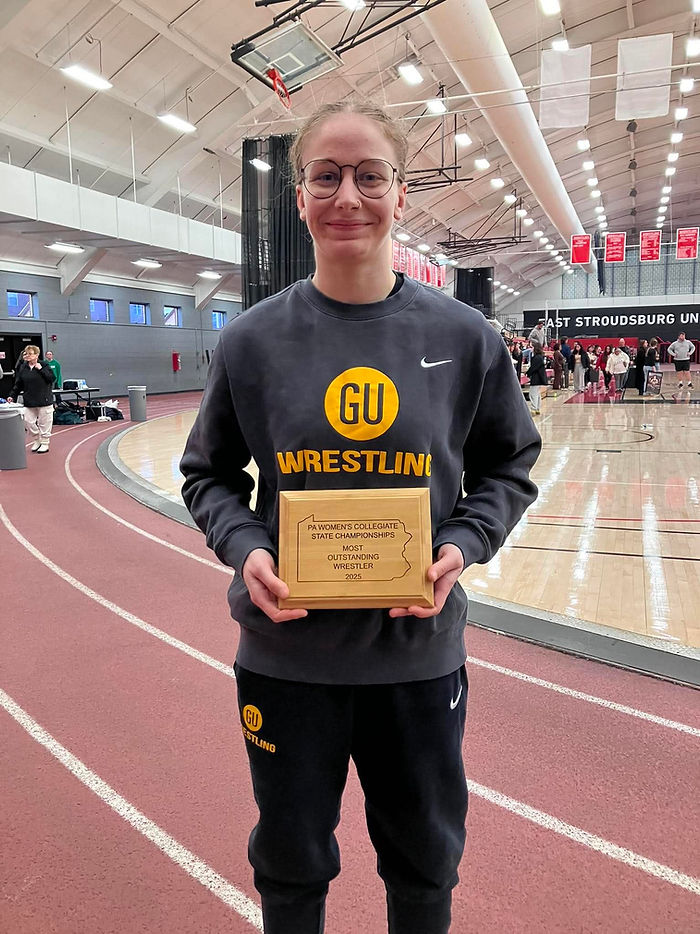
Who do you credit the most for helping you reach this point in your journey?
As I mentioned in my previous answers, I owe so much of my success to my family. Without them, I would never have had the opportunity to be here or achieve everything I have accomplished, both academically and in wrestling. We talk on the phone every single day, and one of my biggest motivations is making my parents and siblings proud.
I also owe a great deal to my coaches, my teammates, and the outstanding medical staff at Gannon University. Their guidance, support, and belief in me have been invaluable throughout my journey.
How did Study N Sport help you throughout your journey?
Study N Sport supported me from the very beginning. They helped me find the right universities, guided me through the college recruitment process, assisted with writing emails, and created a highlight video that played a key role in helping me earn multiple scholarship opportunities. They also helped with the translations and documentation required for my university applications.
Beyond all of the practical support, the greatest impact they had on me was helping me build my confidence. Looking back, if I hadn’t registered with Study N Sport in 2021, I truly don’t believe I would be where I am today. I’m incredibly grateful for everything they did to help me take the first steps toward achieving my dream.
What was the most difficult part of your years in the United States, and what was your greatest experience?
I think the hardest part of living, studying, and competing on another continent is being so far away from your family. You miss them every day, and you can’t simply go home to tell them about your day, talk about a difficult competition, give them a hug, or just spend time with them.
Throughout my wrestling career, I had already spent a lot of time away from home at training camps, so at first it didn’t feel that different. It almost felt like I was just at another training camp. But after about two or three months, the homesickness really set in. More than anything, I just wanted to hug my family. That’s why, at the end of each academic year, going home and finally seeing them again after a year apart was an incredible feeling.
Over time, I learned to adapt. Of course, I still miss my family every single day, but I also understand that making sacrifices is part of pursuing my dreams. They have supported me every step of the way and have always wanted what is best for me and for me to be happy.
Just a week ago, my family came to visit me for two weeks to celebrate my graduation. I can honestly say I was the happiest person in the world. It was an unforgettable experience to see them again after a year apart and to show them the place that had been my home for the past four years. Being able to make them proud meant everything to me.
As for my best experience, I honestly can’t choose just one. I believe that every single day over the past four years has been a blessing and a gift. Every day brought a new opportunity to learn, grow, and pursue my dreams, and that is what made this journey so special.
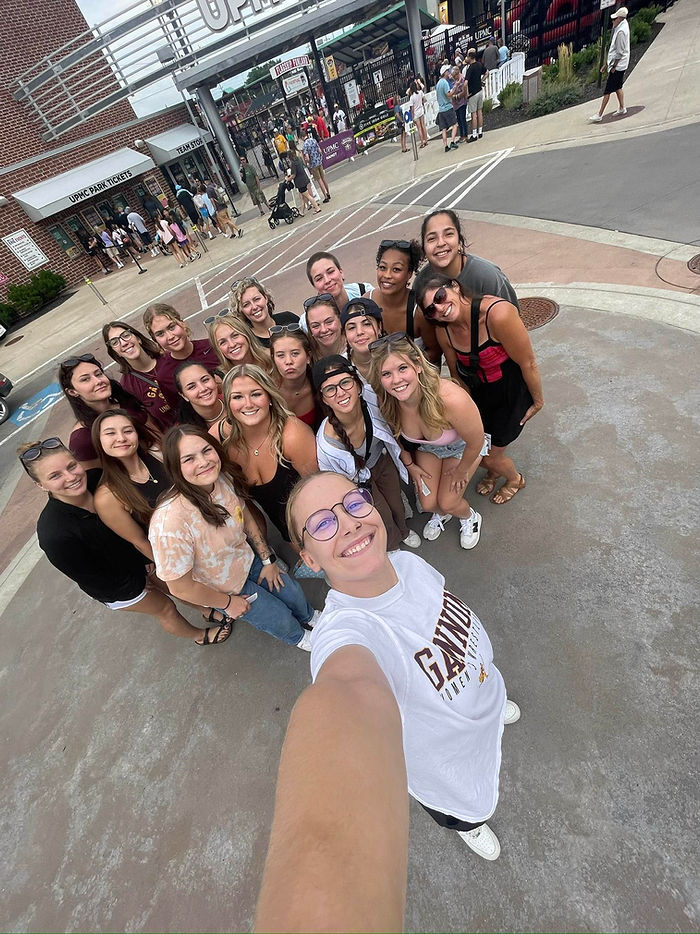
Beyond earning a degree and building your athletic career, what has collegiate wrestling in the United States given you?
Competing in the United States has given me the opportunity to build an incredible network of relationships. Over the years, I’ve had the chance to train at and visit several high schools, as well as help coach athletes, and I’m always welcomed back—whether it’s in Ohio or New York.
Many of my teammates and the schools they came from have truly appreciated the mindset and perspective I brought as an athlete from Europe. Being able to share a different approach to wrestling and learn from theirs has been an invaluable experience.
More than anything, my university experience has given me a lifelong adventure. It has opened doors, created opportunities, and allowed me to continue building both my professional career and my future in wrestling.
What are you doing now, and how big a part of your life is wrestling today?
Right now, I’m enjoying my summer and taking some time to recover after four demanding years of balancing college and competitive athletics. In the coming weeks, I’ll begin my new position at the Erie County Court, where I’ll be working with property tax and other tax-related matters.
At the moment, I’m focused on recharging, but that won’t last long. Starting next week, it’s back to work—both professionally and athletically.
The Olympic Games remain my ultimate goal, so there’s no slowing down. This is simply a period of recovery before I begin the next chapter, continuing to pursue excellence in both my career and my wrestling journey.
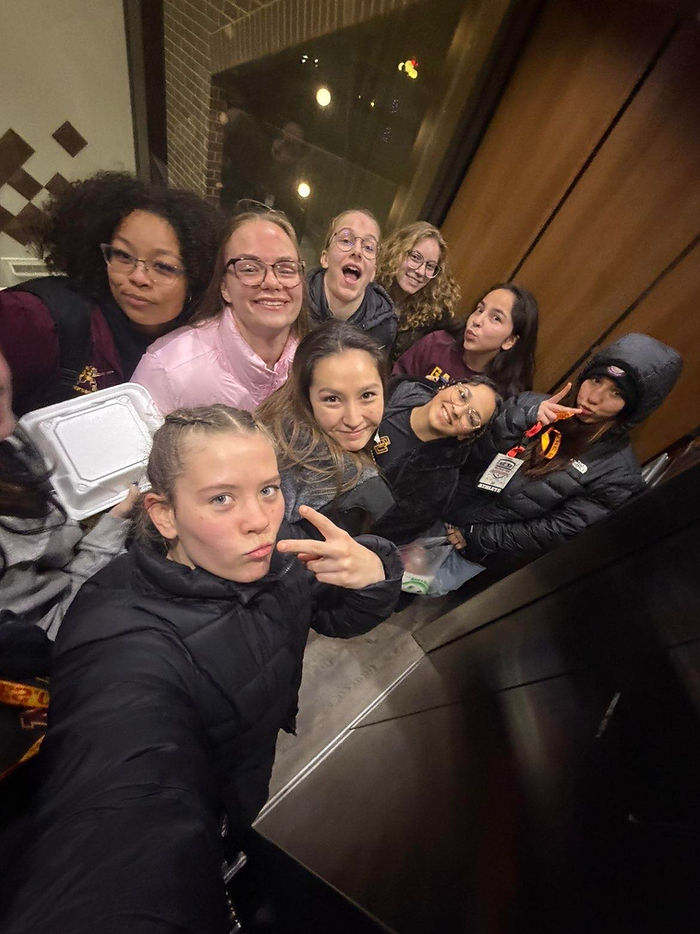
If you could start all over again, would you choose this journey again? Why?
Absolutely. If I had the opportunity to start this journey all over again, I would do it again without a second thought.
The experiences I gained—and the memories my family was able to share through this journey—are truly priceless. Not everyone gets the chance to live through something like this, and that’s why I’m incredibly grateful to everyone who played a part in making it possible.
During my time at university, I was able to build both a successful academic career and a competitive wrestling career. Because of that, my professors and the athletic department have welcomed me back with open arms to share my experiences with future student-athletes and to give back to the university community that has given me so much.
Looking back, this experience shaped me not only as a wrestler and a professional, but also as a person. It gave me lifelong friendships, unforgettable memories, and opportunities that I never could have imagined. That’s why I wouldn’t change a single thing—I would choose this path again every time.
What message would you give to young wrestlers who are thinking about studying and competing in the United States?
The biggest message I would share with any young wrestler considering this path is simple: never believe that you’re not good enough.
You are good enough. You are capable of achieving your goals. Never limit yourself by thinking too small. If you’ve decided to chase your dreams, then it’s time to wake up, stop dreaming, and start working for them.
Wrestling is one of the toughest sports in the world, and earning a university degree in a foreign language is far from easy. But if you truly believe in yourself and are willing to put in the work, you can accomplish it.
The mindset that drives me every single day is, “I’m going to make it, no matter what.” And if something doesn’t go the way I planned, I don’t see it as failure. I see it as another milestone—an opportunity to learn, improve, and come back stronger.
Don’t let one mistake define you. Don’t let one bad grade or one tough competition take away your confidence. Every challenge is another step toward becoming the person and the athlete you want to be.
Believe in yourself, stay resilient, keep working hard, and never stop chasing your dreams.
We want to get to know you better


