Share this article
Tell us a bit about how you started playing ice hockey, and which university did you study at in America?
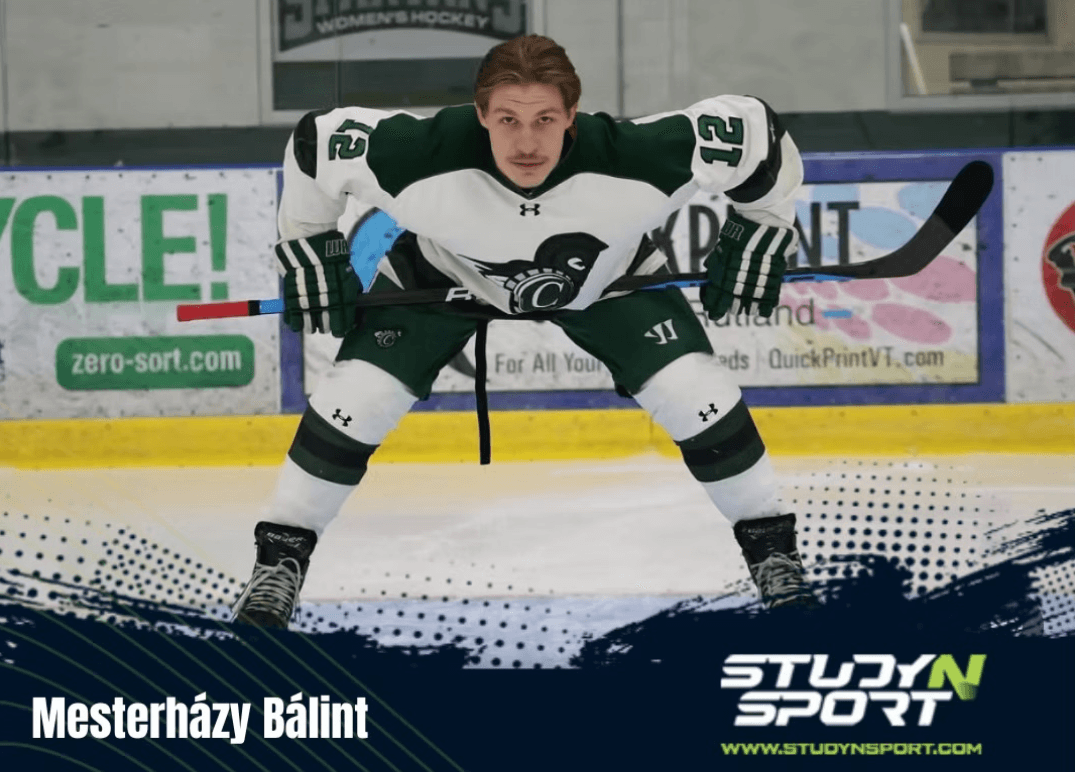
I started going to public skating sessions when I was young, around 4 or 5 years old. My sister was a figure skater, and my parents thought the cold air would be good for me. After I had been going for a long time, coach József Bartalis asked me why I didn't join the little ones for skating lessons, to which I replied that it was because I could already do everything. Once I demonstrated this to him, he invited me to my very first training session.
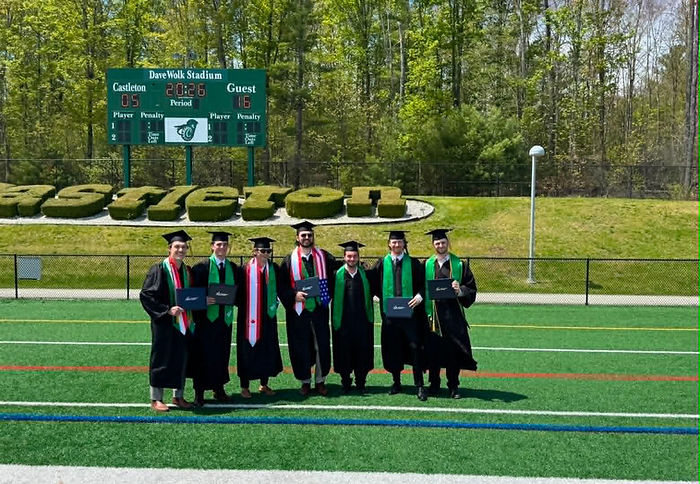
I spent my college career at Castleton University (now Vermont State University), where I studied business management and computer engineering.
Looking back, why did you decide at the time that you wanted to study and play hockey in America?
I started playing ice hockey in Győr, in a non-hockey family, so at first we didn't know the different levels or where the best place of development would be.
When I wanted to take a step up within Hungary, I travelled to Budapest for training almost every day. The constant travelling was very exhausting, which made my parents and me realize that we needed to find a place where school and sport were integrated. This first led me to Okanagan, where I got to know the NCAA, and that's where I set it as a long-term goal.
Now that you have graduated, how do you see it: how much has this period changed you as a person and as an athlete?
I changed a lot during university, both as an athlete and as a person. Every morning the ice was free for the team players, and I took full advantage of this. So from a hockey perspective, I think I developed a lot.
On a personal level, I made great, lifelong friends, learned how to live more or less independently, and also discovered what else I could be passionate about outside of ice hockey, such as cooking.
What do you see as the biggest difference between the Hungarian and American ice hockey culture, training system, and league system?
I think the biggest difference is in the number of players and the school system. A lot of schools in America have their own teams, and very often players compete in multiple sports until the end of high school. If they want to continue, they usually make the decision on which sport to keep before university. (Though I knew several people who competed in two sports even in college.)
In addition to schools, there are also a bunch of club teams at multiple levels. Having many teams means not only are there more players, but it also creates competition within the teams: those who are not good enough have to continue at a lower level, while those who perform better than their peers can step up.
In Hungary, at least when I was young, this was not an option outside of Budapest. If someone wanted to step up, they had to go far because many cities only had a team at one level.
To whom do you owe the most for getting to where you are today?
I owe by far the most to my parents. They helped me immensely along my journey, and it is largely because of them that I am who I am today.
Alongside my parents, I also must mention a couple of my coaches: Peter Bohunicky, who introduced me to the world of hockey skills, and Gyula Jécsi, who helped me a lot during my later summers with my development.
How did Study N Sport help you on your journey?
I also owe a lot to Study N Sport, they helped me immensely to get out there. As I already mentioned, I don't come from a "hockey family", so I didn't know much about the hockey world.
When I decided I wanted to get to America, we navigated the road to college hockey together with Study N Sport (known as EasyGo back then). Together we learned that college hockey differs from other sports in that hockey players start university later on average, and many of them play junior hockey beforehand.
Study N Sport helped with the communication with the universities and ultimately played a critical role in placing me at Castleton. Without Study N Sport, I probably wouldn't have made it to college.
What was the hardest part of your years in America, and what was your best experience?
I consider managing injuries to be the hardest part of my years in America. Before university, I didn't have any serious, tear-type injuries, and managing them is not easy. There is no plan as clear-cut as with a fracture, instead you have to take it day by day. You want to return as soon as possible, and in many cases you feel like you are ready, but after one movement the pain returns. In times like these, it's hard to step back and let someone else take the opportunity, but it is necessary for the sake of the team. At the same time, it is also hard to lose your position within the team and then try to fight your way back there.
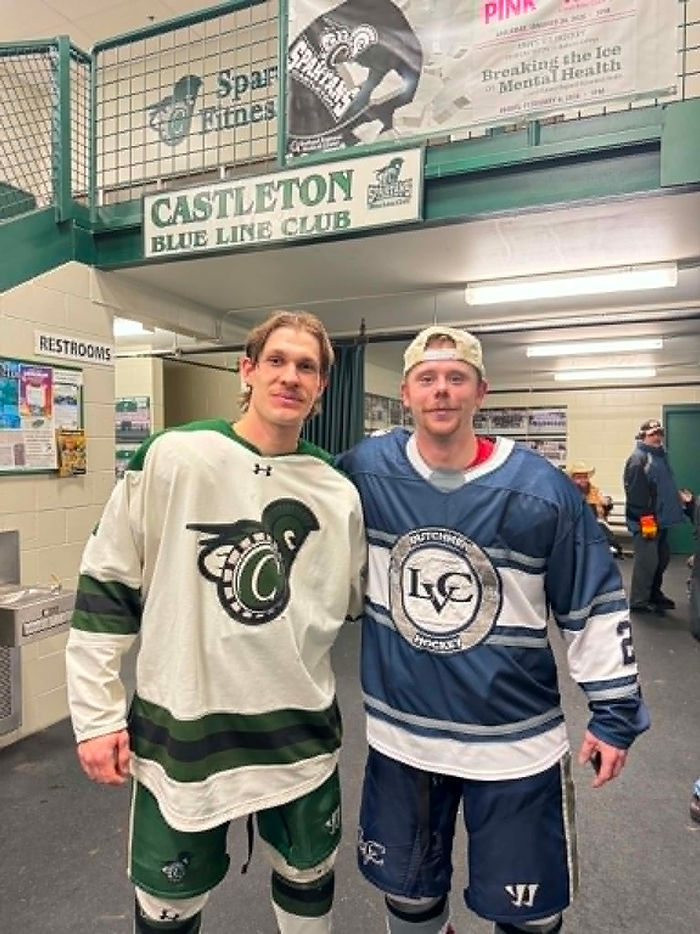
My best experience was the time spent with my friends. On and off the ice, you do everything together for four years and build lifelong relationships. I don't have one specific best memory, but what I remember most happily are my roommates, teammates, and the time spent with them.
But then again, beating the rival, nationally-ranked military academy team on their own ice on Veterans Day is not a bad feeling either.
What are you doing now, what is your current occupation, and to what extent is ice hockey still a part of your life?
Currently, I am looking for a team; I would like to continue playing ice hockey at a professional level next year. This summer I'm doing summer preparation as I usually do and on the side, I also try to do as much programming as I can.
If you could start over, would you do it again? Why?
If I could start the whole thing over, I would definitely do it again. It would be even better if I could keep what I know today. I made decisions many times that I would have made differently if I had known how the wider hockey world worked.
Regardless of that, I really enjoyed this whole journey, learned a great deal along the way, and also developed tremendously as a person.
What would be your message to young hockey players who are currently thinking about going to America to study and play sports?
I think my message would be to go for it and make the absolute most of every minute. These few years pass by very quickly; I still remember my first day as if it were yesterday.
And they shouldn't be afraid to ask for help, they should get to know the system as well as possible, because as the saying goes: knowledge is power.
Interesting facts, stories
I played my first national team matches against my club team at the time, Okanagan, and on their home ice to boot. My first major injury — a broken arm — was suffered against none other than my hometown team, Győr.
At age 17, I travelled to a tryout around Chicago. After the flight, a three-hour drive was waiting for me, but after an hour and a half, the driver dropped me off at a gas station in the middle of the night because he wanted to go home. In the end, with great difficulty, I found another ride, but for a while it looked like I would be sleeping at the gas station.
Before the professional season in Győr, I wanted to head back to America, but during the COVID period, I was informed in Istanbul that I could not enter the United States. A few weeks before the season, I was left without a team; in the end, I was given a new opportunity in Győr.
We want to get to know you better